
Does your loved one need memory care? Look for these 4 signs
While many individuals hope to live in their own homes for the entirety of their lives, it is not always the best – or most realistic – choice for the caregiver or the person who may be living with cognitive impairment. While cognitive decline is often a gradual process, there may be a time when...

While many individuals hope to live in their own homes for the entirety of their lives, it is not always the best – or most realistic – choice for the caregiver or the person who may be living with cognitive impairment. While cognitive decline is often a gradual process, there may be a time when it becomes clear that a memory care community is the right choice for your family. Here are some memory care signs it may be time to consider a move.
Memory Care Signs to Watch
1. Safety at home becomes a concern
Perhaps you have noticed some changes in your loved one. Is getting around on their own becoming more difficult? Are they able to stand and walk without assistance, or does it seem to be more challenging lately? Sitting for too long is also a concern that can bring about unwanted consequences. Weight loss, poor posture, and bruises that seem to appear out of nowhere are also signs they could benefit from a specialized program.
A quality memory care community is designed with features to keep your loved one as safe and as active as they can be, with activities and features to enhance their well-being, increase nutrition, and reduce anxiety and agitation. Specialized apartment buildings often feature significant objects, signage or color-coded walls to help residents with way finding.
Many memory care communities also incorporate soft, serene décor and a home-like atmosphere intended to create a calming environment, while some have tranquil gardens with secure courtyards and limited exits to help keep residents safe.
2. Caregiving seems extra difficult
What began as an occasional check-in on your loved one has morphed into a full-time job, eroding any free time you may have had, and requiring round-the-clock scheduling to keep everyone afloat. But you still feel like you are sinking. Even the most loving caregiver is not immune to burnout, and if you notice your patience shrinking while the needs of your loved one are increasing, it may be time to consider a new living situation.
The specially trained team at a memory care community is equipped to handle it all: medication management, bathing, dressing, grooming, ongoing orientation and guidance.
3. Your loved one seems more withdrawn
Confusion and anxiety can cause a person living with dementia to avoid social situations and prefer solace, as leaving the house and connecting with others becomes more challenging. And if your loved one lives alone, the impacts of isolation are often compounded by the lack of socialization and activity. The result is often an increase in anxiety and symptoms of Alzheimer’s. In fact, even for individuals without memory impairment, social isolation is associated with about a 50% percent increased risk of dementia.
By contrast, memory care communities place an emphasis on therapeutic and social programming to increase residents’ positive experiences and enhance their overall quality of life.
4. Missed appointments and forgotten bills
From time to time we all miss an appointment or lose a bill in a pile of junk mail, but if you begin to notice a trend in your loved one, such as paying bills late, paying the same bill twice, completely skipping payment, or forgetting about recent purchases, there may be cause for concern. Seniors are especially vulnerable to financial scams so it’s important to ensure they aren’t being taken advantage of, even by well-meaning “advisors.” In fact, a decline in financial skills and money management is often one the first functional changes to be identified in the early stages of dementia.
Though these memory care signs are good to work from, don’t ignore your gut feeling. While your loved one’s physician can perform a thorough cognitive analysis including a CT scan and MRI, sometimes you just know when something’s not right. Making a change in your loved one’s living situation is not an easy choice, but it can be the best choice. Finding a community that feels right for your loved one can provide you with peace of mind knowing your loved one is being cared for in a safe and comfortable environment.
Consider touring memory care communities early on to get a sense of the best options for you and your loved one. Addressing this topic before a crisis hits will ensure you’re not left scrambling to figure it out on the spot.
Heritage Communities offers a range of options—from home care to independent and assisted living, memory care, and respite services for older adults—in Nebraska, Iowa, and Arizona. We encourage you to call the Heritage Communities location nearest you to learn more! Or, download our “Should You Stay or Should You Go?” guide. It’s a free guide to help you decide whether you should stay in your current home or make a move to a senior living community.
Recent Articles

The Benefits of Community Life: Why Senior Living Can Enrich the Years Ahead
The holidays remind us how good it feels to gather… to share meals, stories, and simple moments. But for many older adults, those moments become less common over time. As friends move away, routines change, and daily tasks get harder, it’s easy for life to feel quiet and isolating. At Heritage Communities, we believe there’s...
4 Minute Read
How to Celebrate the Holidays With Someone in Senior Living
If you’re starting to consider senior living for a parent, the timing may feel complicated… especially around the holidays. You might wonder: Will the season still feel special? Will we still celebrate the way we always have? Will Mom feel left out? We understand those worries. They’re natural, and they come from love. What we...
6 Minute Read
When You Suspect Something’s Changing: A Compassionate Guide for You and Your Parent
If you’re noticing small shifts in your parent’s health, memory, or daily routines, you might be wondering whether you’re overthinking things… or if something really is changing. Download the free PDF checklist to help!
5 Minute Read
Ringing in the Season: Spotlight on Our Bell Choir at Heritage Communities
The holidays are a busy, fun time in senior living! Across our communities, families and groups are getting ready to celebrate with their families and their Heritage family. We’re glad to share a story from Orchard Pointe at Terrazza (a Heritage Community) that really shows what Living Better together looks like. It’s about the wonderful...
4 Minute Read
Does AI Replace Caregivers? The Truth About Technology in Memory Care
In senior living, new AI technology helps caregivers... it doesn't replace them. By handling background monitoring and alerting, AUGi allows caregivers to spend more time where it matters most: engaging with residents, offering comfort, and providing personalized care.
4 Minute Read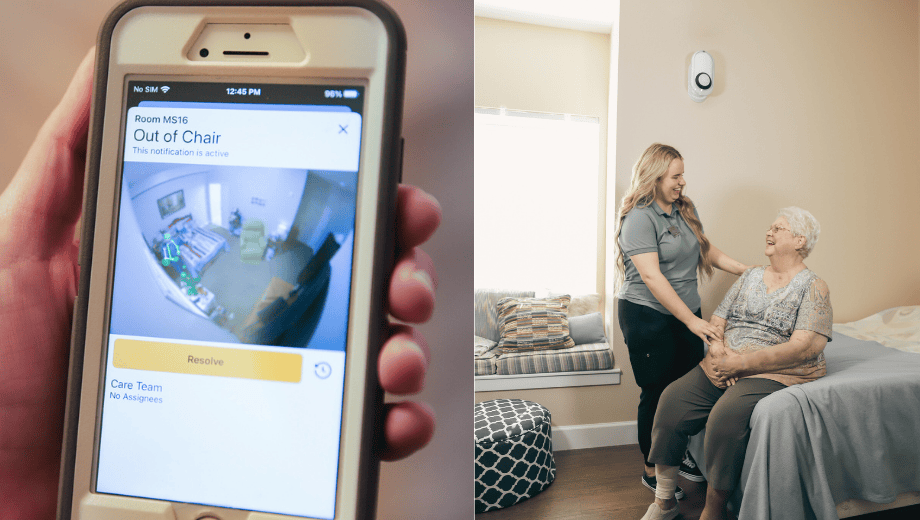
How AI Is Redefining Fall Prevention in Memory Care: What Families Need to Know
AUGi, an AI-powered safety companion, is installed in senior living resident apartments and common areas. AUGi uses discreet sensors and predictive analytics to spot fall risks before they become emergencies.
4 Minute Read