
Prevent Falls in Seniors With These Fun Exercises and Activities
No one wants to experience a fall, but for those over 55, a fall can lead to serious injury. That’s why learning how to prevent falls is so important for healthy aging. Here’s a look at why falls happen, why preventing them is important, and some exercises and activities that can help older adults build...
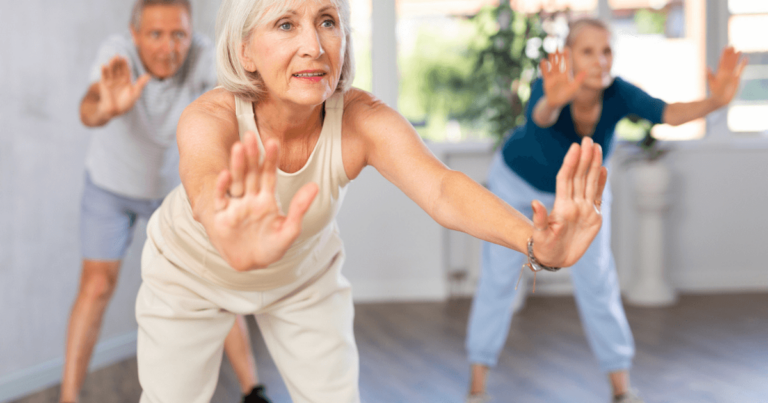
No one wants to experience a fall, but for those over 55, a fall can lead to serious injury. That’s why learning how to prevent falls is so important for healthy aging.
Here’s a look at why falls happen, why preventing them is important, and some exercises and activities that can help older adults build balance and stability, while actually being fun and engaging.
To help prevent falls, first understand why they happen
Here are some common reasons why seniors fall:
- Changes in vision
- Weakening hip and leg muscles
- Poor posture or spinal degeneration
- Stumbling due to the inability to lift your feet
- Slower reaction time to obstacles
- Drug interactions that result in dizziness or poor balance
- Lightheadedness caused by low blood pressure
Why it’s so important to prevent falls
According to the Centers for Disease Control and Prevention, about 36 million falls are reported among older adults each year, resulting in more than 32,000 deaths. One out of every five falls causes an injury, such as a broken bone or head injury.
Working on flexibility, stability, stretching and strength are vital when your goal is to prevent falls so you can live a long and healthy life. Many of the movements are simple, and many are fun activities as well. Always remember to take your time, do what feels comfortable, and breathe deeply. Here are just a few suggested exercises to prevent falls.
Download our free guide,
Family Decision Toolkit.
Getting started: activities and exercises to help prevent falls
Dance
Dancing is a wonderful exercise for aerobic fitness, weight management, muscle and bone strength and endurance. In addition, moving through space in different directions and in different ways improves static and dynamic balance, spatial awareness, coordination, and reaction time. Dancing is also an excellent way to get all the benefits of socializing and interacting with others on a regular basis. And it can be a lot of fun!
Tai Chi
The National Council on Aging reports that many studies have shown Tai Chi to be one of the most effective exercises to prevent falls. Tai Chi targets leg strength, flexibility, range of motion, and reflexes.
According to the Tai Chi for Health Institute, with regular practice, Tai Chi improves balance by strengthening muscles and co-ordination; at the same time, it strengthens the mind, thereby improving calmness and confidence in not falling. Thus, both physically and mentally, Tai Chi is an extremely effective exercise when your goal is to prevent falls.
Yoga
Yoga is good for so many things that affect healthy aging: reducing stress, treating fatigue, lessening pain, and perhaps most importantly, increasing core strength and balance. This last one can reduce the risk of falling.
You don’t have to do complicated moves to the benefits. For example, the simple mountain pose can help you improve your posture and body awareness. Stand tall, weight distributed evenly on both feet, keep your knees slightly bent. Draw your shoulder blades together and down your back. Relax your arms and let your palms face forward. Breathe deeply and relax.
Walking
No special equipment required, just a good pair of walking shoes and a place to walk (indoors or outdoors). Add a friend or two and you have a fun way to get a workout that doubles as a balance booster!
According to Harvard Health, walking strengthens the muscles in the lower body. It also is a great way to stretch muscles and thus improve your posture, which in turn, can improve your balance. Don’t worry about distance, especially if you are beginning a walking program. And don’t hesitate to use a cane or walker if you need one. As you feel stronger, add more minutes to your walks. Try to walk at least 150 minutes a week. Wear comfortable clothing, walk with confidence, and breathe deeply.
Grapevine
Here’s an easy move that can help improve your balance. You might begin by being near a wall or a chair to help steady you or hold someone’s hand if needed. Simply step across in front of your right foot with your left leg. Continue moving across the room sideways, uncrossing the left leg. Repeat. When ready, just reverse direction. Wear smooth-bottomed shoes and concentrate on your movements.
At Heritage Communities, we are here to help you live better and live longer.
We do this by proactively implementing best-in-class lifestyle enrichments, senior-centric technologies, and the latest approaches to senior care. Our values define how we lead, care, and behave at every community we own. Let us tell you more.
We redefine living better. You make it your own. Download our free guide, Family Decision Toolkit. Or contact us today.

Recent Articles
Noticed a Change? Processing the Feelings That Come with Senior Care
If you've noticed something changing with your senior loved one, this is the place to start. This article will help you sort through the feelings with no pressure or immediate answers. When you're ready, we're here to help.
5 Minute Read
The Invisible Load… and Why Most Family Caregivers Don’t Stop to See What They’re Carrying
Download our free guide "The Invisible Load" to understand and take stock of the caregiving weight you're carrying. It might help you understand what to do next.
6 Minute Read
The Benefits of Community Life: Why Senior Living Can Enrich the Years Ahead
The holidays remind us how good it feels to gather… to share meals, stories, and simple moments. But for many older adults, those moments become less common over time. As friends move away, routines change, and daily tasks get harder, it’s easy for life to feel quiet and isolating. At Heritage Communities, we believe there’s...
4 Minute Read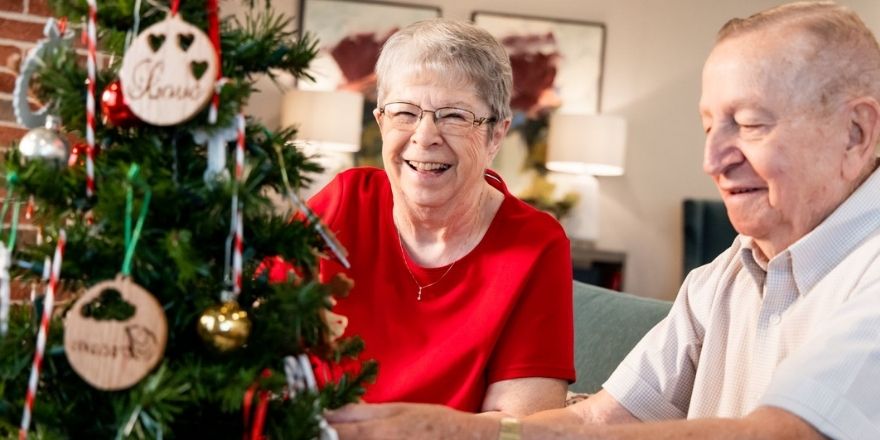
How to Celebrate the Holidays With Someone in Senior Living
If you’re starting to consider senior living for a parent, the timing may feel complicated… especially around the holidays. You might wonder: Will the season still feel special? Will we still celebrate the way we always have? Will Mom feel left out? We understand those worries. They’re natural, and they come from love. What we...
6 Minute Read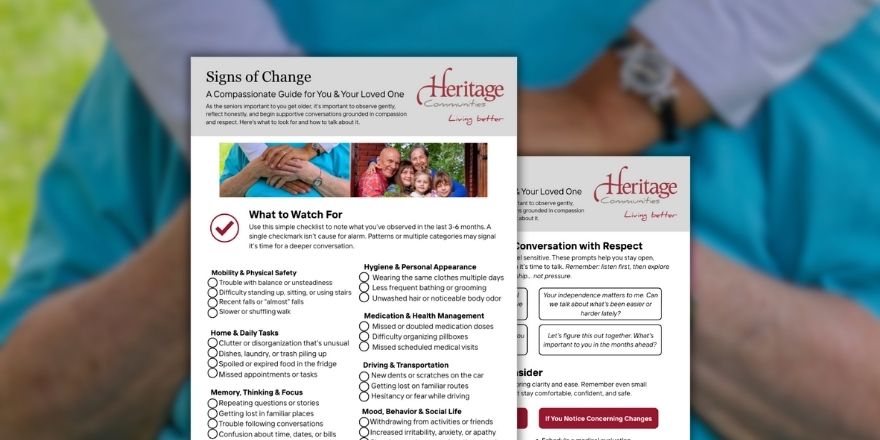
When You Suspect Something’s Changing: A Compassionate Guide for You and Your Parent
If you’re noticing small shifts in your parent’s health, memory, or daily routines, you might be wondering whether you’re overthinking things… or if something really is changing. Download the free PDF checklist to help!
5 Minute Read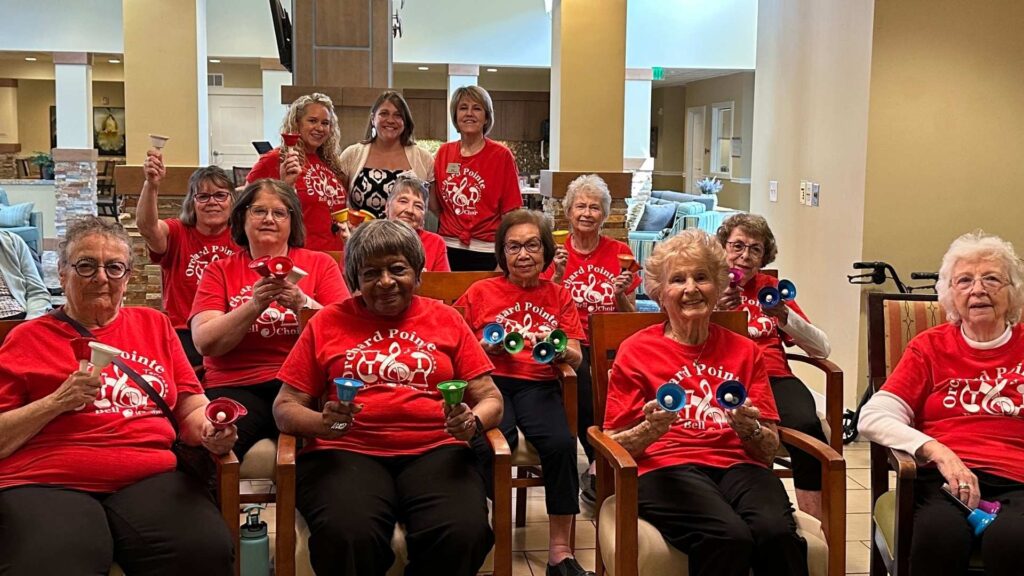
Ringing in the Season: Spotlight on Our Bell Choir at Heritage Communities
The holidays are a busy, fun time in senior living! Across our communities, families and groups are getting ready to celebrate with their families and their Heritage family. We’re glad to share a story from Orchard Pointe at Terrazza (a Heritage Community) that really shows what Living Better together looks like. It’s about the wonderful...
4 Minute Read